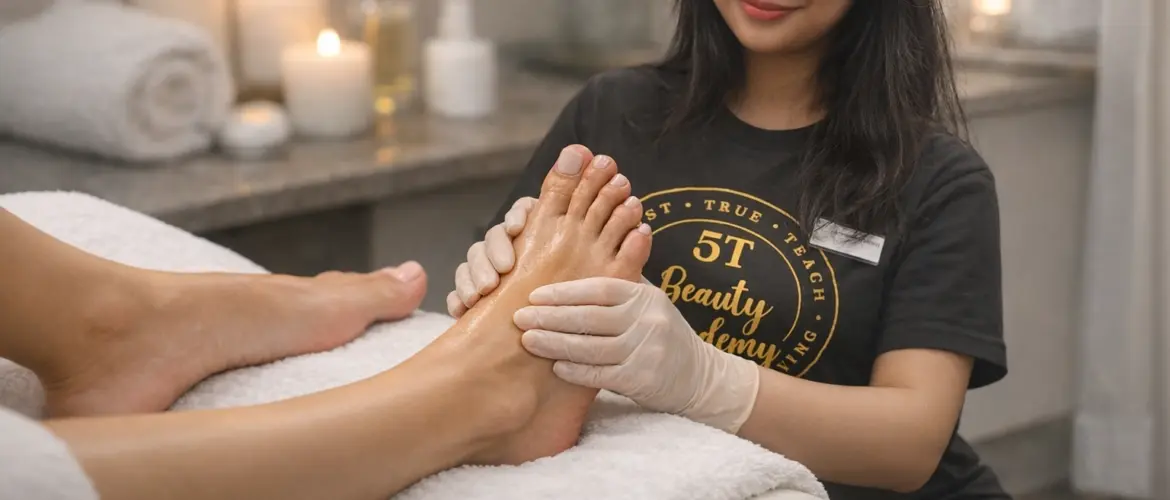
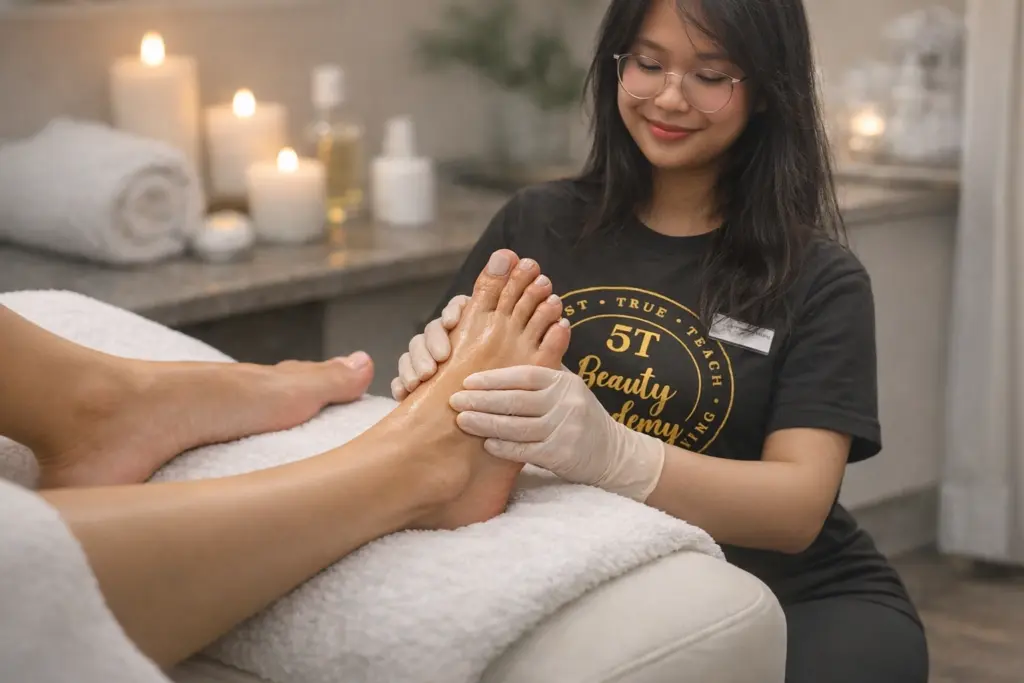
Foot massage is one of the most important steps in professional pedicure services. It is not just about relaxation—it is a technique that improves circulation, relieves tension, and enhances the overall client experience.
In modern nail salons, foot massage has become a key factor that separates basic services from premium services. Clients today are not only looking for clean nails but also for a relaxing and therapeutic experience.
In this guide, you will learn what foot massage is, why it is essential in pedicure services, and how professional nail technicians use it to deliver better results.
What Is Foot Massage?
Foot massage is the systematic manipulation of soft tissues in the feet, including the skin, muscles, and joints. It is performed using hands, fingers, and controlled pressure techniques to relax the client and improve circulation.
In pedicure services, foot massage typically focuses on the feet, ankles, and lower legs. It helps prepare the skin, enhance product absorption, and create a luxurious experience for clients.
Why Massage Matte
Blood Circulation
Improves blood flow to hands and feet
Muscle Relaxation
Releases tight, tỉed muscles
Stress Reduction
Calms and nervous system
Product Absorption
Helps lotions absorb deeper into skin
Client Experience
Makes every service feel luxurious
Service Value
Clients pay more for premium touch
What Is Massage?
Massage is the systematic manipulation of soft tissue — skin, muscles, and joints — using hands, fingers, and thumbs.
=>Prepare the skin before treatment
In manicure and pedicure services, massage is applied to the hands, wrists, forearms, feet, ankles, and lower legs.
=>Relax muscles and soften tissue
Touch signals safety and care to the brain — this is why clients feel relaxed during massage.
=> Improve product results — creams and oils work better
=> Create a full-service experience clients remember
Why Are There 5 Different Movements?
Just like a workout uses different exercises for different results, massage uses 5 distinct movements — each designed for a specific purpose.
Different Functions
Each movement targets a different layer of the skin and muscle
Relax or Stimulate
Some movements calm the body; others energize and wake it up
Improve Circulation
Specific movements push blood and fluid through the tissue
Full Treatment
Combining all movements creates a complete, professional massage
The 5 Basic Massage Movements
These five techniques form the foundation of every professional hand and foot massage. Learn them in order — they build on each other.
Effleurage - Gliding
Petrissage - Kneading
Friction - Pressure
Tapotement - Tapping
Vibration - Shanking
Effleurage
Effleurage is the foundation of every massage. It uses long, smooth, flowing strokes that move in one direction — usually toward the heart.
✦Light pressure —never force or push
✦ Always the first and last movement used
✦ Warms up tissue and prepares skin
✦ Spreads lotion or oil evenly
✦ Signals the client to relax and trust you
Petrissage
Petrissage goes deeper than effleurage. You lift, squeeze, and roll the muscle tissue with your fingers and thumbs — like kneading dough.
✦ Lift and squeeze the muscle away from the bone
✦ Increases blood and lymph circulation✦ Releases built-up tension in the muscles
✦ Works well on the palm, thumb pad, and calf
Tip: Use medium pressure — not too soft, not painful.
Friction
Friction uses the tips of your thumbs or fingers to make small, deep circles on a specific area. It targets tight spots and knots.
✦ Apply firm, focused pressure in small circles
✦ Breaks down tension points in the tissue
✦ Great for knuckles, heels, and arches
✦ Works on a specific, small area at a time
Tapotement
Tapotement is a rhythmic tapping movement performed with the fingertips or the side of the hand. It wakes up the skin and nerves.
✦ Use light, bouncy fingertip taps
✦ Stimulates nerve endings in the skin
✦ Energizes and refreshes the tissue
✦ Keep a steady, even rhythm — never random
Think of it like gentle rain tapping on a window — light and rhythmic.
Vibration
Vibration is a trembling or shaking movement applied through your hands into the client’s tissue. It is one of the most calming techniques.
✦ Hold the hand or foot and shake gently
✦ The movement travels deep into the muscle
✦ Calms the nervous system
✦ Leaves the client feeling deeply relaxed
How Do the Movements Compare?
Each of the 5 movements works differently on the body. Understanding these differences helps you choose the right technique at the right time.
Hands and feet contain some of the highest concentrations of nerve endings in the entire body. This is why massage in these areas feels so powerful.
Why It Matters
=>Thousands of nerve endings respond to touch
=>Stimulating pressure points sends signals to the brain
=>The brain responds by releasing relaxation hormones
Reflexology Connection
=>Reflexology maps the foot to organs of the body
=>As students, focus on general relaxation, not medical claims
=>Your touch makes a real difference — trust the process
Why Always Start & End with Effleurage?
Effleurage is the greeting and the goodbye of your massage. It frames the entire treatment and ensures your client feels safe and comfortable throughout.
🤲 At the Start:
Warms up the skin and muscles. Introduces your touch — no surprises. Spreads product evenly. Tells the client: “You are safe.”
🌿 At the End:
Calms the nervous system after deeper work. Creates a smooth, peaceful finish. Tells the client: “We are done. Rest now.”
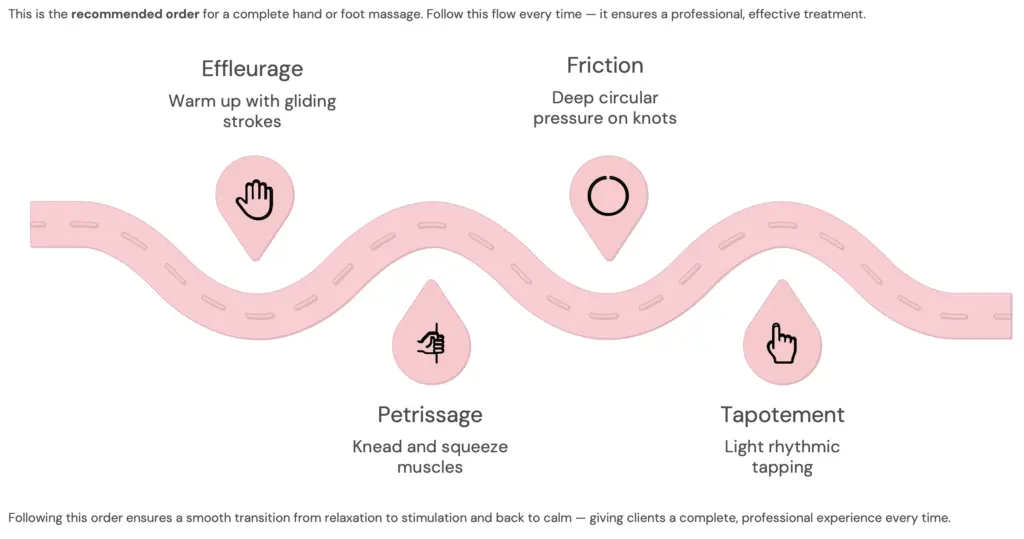
Massage Flow: Step-by-Step Example
This is the recommended order for a complete hand or foot massage. Follow this flow every time — it ensures a professional, effective treatment.
Common Mistakes to Avoid
Even skilled technicians make these errors early in training. Being aware of them now will help you build better habits from day one.
❌ Too much Pressure
More pressure does NOT mean better results. Always check in with your client and start lighter than you think is needed.
❌ Moving Too Fast
Speed breaks the relaxation response. Slow, intentional movements communicate professionalism and care.
❌ Skipping Steps
Each movement prepares the tissue for the next. Skipping steps reduces results and can feel abrupt to the client.
❌ Breaking the Flow
Avoid lifting both hands off the client at the same time. One hand should always maintain contact during the massage.
Your Practice Goal
Massage skill is built through repetition and mindfulness. Every time you practice, focus on these three qualities:
Smooth Movement
No jerky or choppy strokes — every motion should transition into the next
Consistent Rhythm
Keep a steady pace throughout — your rhythm sets the client’s mood
Client Comfort First
Always ask for feedback. Their comfort is your most important guide
Always ask for feedback. Their comfort is your most important guide
You now have the foundation. Practice
with intention, treat every client with care, and your skills will grow with
every service.